
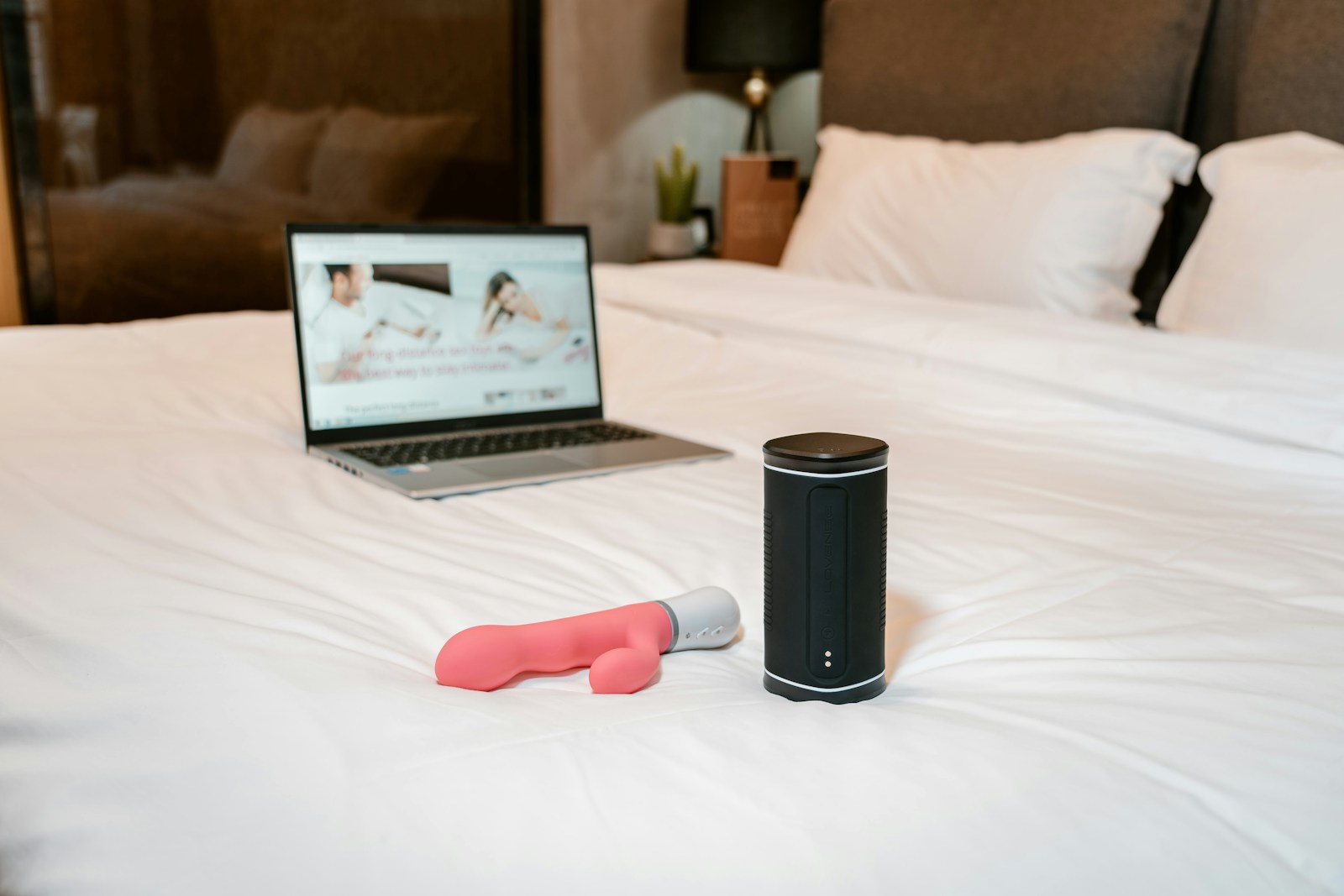
Shopping for intimate toys can feel like navigating a maze without a map. You click on a website, and suddenly you are scrolling through hundreds of options ranging from petite and discrete to intimidatingly large. Without the ability to physically hold or see the item in person, judging scale is notoriously difficult. A toy that looks massive in a photo might arrive fitting in the palm of your hand, while something that looks manageable on screen could turn out to be far too ambitious for a beginner.
Choosing the right dildo isn’t just about aesthetics or color preference; it is fundamentally about your anatomy and your comfort. The “right” size doesn’t exist in a vacuum. What feels pleasurable to one person might feel overwhelming or, conversely, unnoticeable to another. Understanding the mechanics of size—specifically the relationship between length, girth, and shape—is the first step toward a satisfying experience.
This guide breaks down everything you need to know about measuring, shapes, and materials. By the end, you will have the tools to select a toy that fits your body and your desires perfectly, saving you from a drawer full of unused, ill-fitting purchases.
Why Anatomy Dictates Your Choice
Before looking at product specs, it helps to understand what you are working with. The vaginal canal and the anal canal are muscles, and like any muscle in the body, they have limits on how much they can stretch comfortably, especially without preparation.
For vaginal use, the average canal depth is typically between 3 to 4 inches when unaroused. However, during arousal, a phenomenon called “tenting” occurs, where the uterus lifts and the vaginal canal lengthens, potentially accommodating 5 to 7 inches or more. This is why a toy that feels too long at the start of a session might feel perfect ten minutes later.
For anal play, the rules change. The sphincter is a tight ring of muscle that requires patience to relax. Unlike the vagina, the rectum does not self-lubricate. Depth is less of an issue physically—the colon is long—but comfortable width (girth) is the primary limiting factor. Prioritizing girth over length is usually the smartest strategy for anal beginners.
The Metrics That Matter: Length vs. Girth
When reading product descriptions, you will usually see two or three measurements: total length, insertable length, and diameter (or circumference). Knowing the difference between these is crucial.
Total Length vs. Insertable Length
This is a common pitfall for online shoppers. The total length includes the base, the handle, or suction cup. If a dildo is listed as 8 inches long but has a massive suction cup base, the actual part designed to go inside you—the insertable length—might only be 6 inches. Always check for the insertable length specification to know exactly what you are working with.
The Girth Debate: Diameter vs. Circumference
While length often gets the most attention in marketing, girth (width) dictates comfort more than anything else. A 10-inch toy that is as thin as a pencil won’t provide the feeling of “fullness” many users crave. Conversely, a 4-inch toy that is thick as a soda can will be impossible for most to use comfortably.
Manufacturers use two terms here:
- Diameter: The width across the thickest part of the toy. Imagine slicing the toy in half and measuring the circle across.
- Circumference: The measurement around the outside of the toy.
Most Americans are used to visualizing diameter. If you see a circumference measurement and are confused, divide that number by 3.14 (pi) to get the approximate diameter.
How to Measure Yourself
You don’t need fancy equipment to figure out what size you can handle. You just need your hands and perhaps a ruler.
The Finger Test
The most reliable way to gauge your comfort level with girth is the finger test.
- 1 Finger: Approximately 0.5 to 0.75 inches in diameter.
- 2 Fingers: Approximately 1 to 1.25 inches in diameter.
- 3 Fingers: Approximately 1.5 to 1.75 inches in diameter.
If you are comfortable with two fingers, look for toys with a diameter around 1.2 inches. If that feels tight, stick to 1 inch or smaller. If you feel like you need much more stretch, you can look at 1.5 inches and above.
The Ruler Method
If you already own a toy (even a vibrator or a household object you have used safely), measure it. Measure the circumference by wrapping a piece of string around the thickest part and then measuring the string against a ruler. This gives you a baseline. If your current toy feels too small, aim for a diameter 0.25 inches larger. If it feels too big, scale down by the same amount.
Decoding Shapes and Curves
Size is only half the equation. The shape of the dildo determines where you feel the pressure and friction. Different internal “hot spots” require different approaches.
Realistic vs. Abstract
Realistic dildos are molded to look like a real penis, often including veins and a distinct head. The head is usually slightly wider than the shaft. This provides a “pop” sensation upon entry and exit, which stimulating the nerve endings at the opening of the vagina or anus.
Abstract dildos are smooth, stylized, and geometric. They are excellent if you prefer a discreet look or if the realistic aesthetic isn’t for you. They often feature consistent girth, meaning the sensation is uniform throughout the thrust.
Curved Toys for Targeted Pleasure
If you are chasing a specific type of orgasm, a straight toy might not hit the spot.
- G-Spot: Located on the front wall of the vagina (towards the belly button), about 2-3 inches in. A dildo with a distinct upward curve at the tip is designed to massage this area directly.
- P-Spot (Prostate): For those with a prostate, the location is similar to the G-spot but accessed rectally. A curved toy specifically designed for prostate massage will apply the necessary pressure to this sensitive gland.
Tapered vs. Bulbous
A tapered tip (one that starts small and gets wider) is generally easier to insert, making it ideal for beginners or anal play. It allows the muscles to open gradually. A bulbous or blunt tip provides more immediate fullness but can be harder to insert initially.
Material Matters: Hardness and Flexibility
The material of the toy changes how the size feels. A 6-inch dildo made of rigid glass feels very different from a 6-inch dildo made of soft silicone.
Silicone (Dual Density vs. Solid)
Silicone is the gold standard. It warms to the body and is easy to clean.
- Soft Silicone: Squishy and pliable. It compresses when you insert it. A large soft toy is easier to take than a large hard toy because it yields to your body’s pressure.
- Dual Density: These feature a firm inner core surrounded by a soft outer layer. This mimics the feeling of an erection—firm but with a skin-like surface.
Glass, Steel, and Stone
Hard materials like borosilicate glass or stainless steel are rigid. They do not bend, and they do not compress. If you buy a glass dildo with a 1.5-inch diameter, it will remain exactly 1.5 inches during use. Because there is no “give,” you should generally size down slightly when buying rigid toys compared to flexible silicone ones.
Safety Essentials: Bases and Stops
If there is one rule you must never break, it is this: Without a flared base, do not use it for anal play.
The rectum acts like a vacuum. If a toy is inserted completely, it can get sucked further up into the colon. This is a medical emergency that requires a trip to the hospital. A flared base (a wide T-shape or suction cup at the bottom) acts as a safety stop, ensuring the toy cannot get lost.
For vaginal use, a flared base isn’t strictly necessary for safety, but it is helpful for leverage and control.
A Buyer’s Hierarchy: From Beginner to Advanced
If you are still unsure where to start, consider these general categories based on experience level.
The Beginner Tier
If you are buying your first dildo, start modest. You want your first experience to be positive, not painful.
- Length: 4 to 6 inches insertable.
- Diameter: 1 to 1.25 inches.
- Material: Silicone with a slight taper.
- Why: This size mimics the average human anatomy and is generally comfortable for most people without extensive warm-up.
The Intermediate Tier
You know what you like and you are ready for more fullness or depth.
- Length: 6 to 7.5 inches insertable.
- Diameter: 1.3 to 1.6 inches.
- Features: Texture, curves, or suction cups.
- Why: This step up provides a noticeable feeling of fullness. The increased length allows for deeper exploration of the G-spot or P-spot.
The Advanced Tier (“Size Queens”)
You are experienced with stretching and enjoy a very full feeling.
- Length: 8+ inches insertable.
- Diameter: 1.75 to 2+ inches.
- Why: These toys require preparation, plenty of lubricant, and relaxation. They are for users who find standard sizes underwhelming.
Frequently Asked Questions
Is “average” size actually the best?
For many people, yes. The average erected penis is roughly 5.1 to 5.5 inches long with a circumference of about 4.5 inches (roughly 1.4 inches diameter). Most “standard” dildos mimic these dimensions because they tend to be anatomically compatible with the majority of users. However, “best” is subjective. If the average size doesn’t hit your sweet spots, it isn’t the best for you.
How do I clean my dildo?
Hygiene is critical. If your toy is 100% silicone, glass, or stainless steel, it is non-porous. You can clean it with warm water and antibacterial soap, or boil it for 3-5 minutes (check manufacturer instructions first). If the material is “jelly,” TPR, or TPE, it is porous. These materials trap bacteria and cannot be fully sterilized. It is highly recommended to use a condom with porous toys or upgrade to body-safe silicone.
What lubricant should I use?
The rule of thumb relies on the material of your toy.
- Silicone Toys: Use water-based lubricant only. Silicone-based lube can bond with the toy, melting the surface and ruining it.
- Glass/Metal/Stone: You can use any lubricant, including silicone or oil-based.
- Cyberskin/Jelly: Water-based is usually safest.
Can I train myself to take larger sizes?
Yes, this is called dilation. It requires purchasing a size kit or a series of toys that gradually increase in girth. You start with the smallest size, using plenty of lubricant and relaxation techniques. Over weeks or months, as your muscles become accustomed to the stretch, you move up to the next size. Never force a size upgrade; pain is a sign to stop and downsize.
Does the suction cup count as part of the length?
Usually, product descriptions list “Total Length” (tip to base of suction cup) and “Insertable Length” (tip to the start of the base). Always base your purchasing decision on the insertable length. A robust suction cup can add 1.5 inches to the total height of the toy, which is useless for internal stimulation.
Your Pleasure Profile Awaits
Finding the right dildo is a journey of self-discovery. It requires you to be honest about your body’s limits and curious about your desires. By focusing on diameter rather than just length, respecting the need for a flared base during anal play, and choosing body-safe materials, you set yourself up for a safe and pleasurable experience.
Remember that your preferences may change over time. What feels perfect today might feel too small in a year, or you may find that you prefer different shapes for different moods. Start small, use plenty of high-quality lubricant, and listen to your body.